
An extension of a sales tax to fund school system improvements and maintenance will be decided Tuesday in a referendum.
CARNESVILLE – An extension of a sales tax to fund school system improvements and maintenance will be decided Tuesday in a referendum.
The Franklin County School System is asking to extend the local one-cent per dollar tax for five years or until it collects $30 million.
If the tax is approved by voters, the county’s total sales tax levy will remain at seven per cent.
The money collected from the tax will be used to fund a new Royston Elementary School, agriculture and athletic facilities at Franklin County High School and transportation and technology needs, improvements and maintenance.
The items to be funded are listed in the ballot question.
Early voting in the referendum will be open through Friday from 8 a.m. until 4:30 p.m. at the Franklin County Elections and Registration office at 7850 Royston Road in Carnesville.
The school system uses two-to-three mills worth of SPLOST money each year on maintenance projects that can be funded with the sales tax, he said.
Most of the SPLOST proceeds – an estimated $20 million – will be used to build a new Royston Elementary School.
The system plans to sell bonds against the tax proceeds to build the new school.
Part of the cost will be offset by $3 million in state money that Franklin County will apply for by July.
That state money will then be used to pay for other projects on the SPLOST list until tax collections come in.
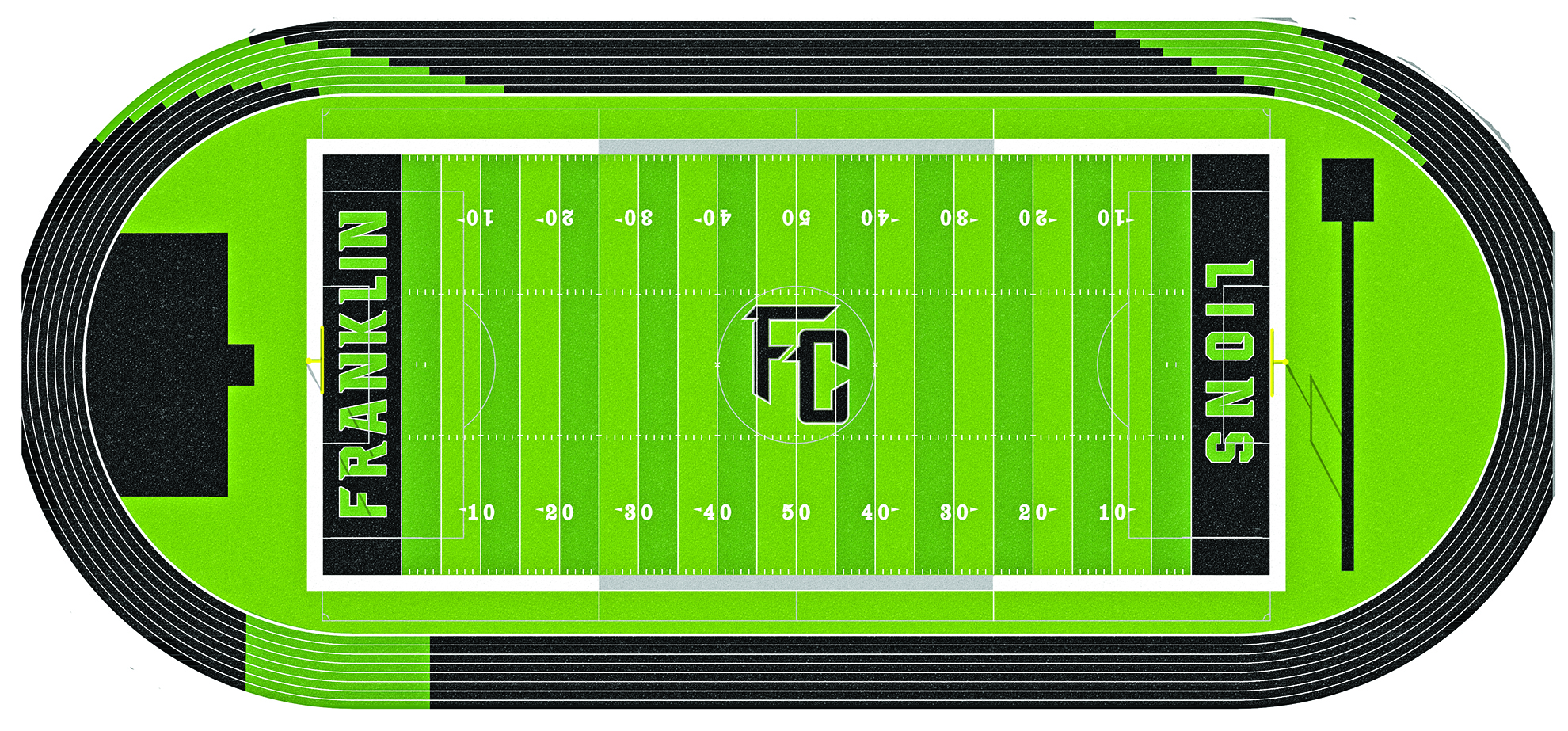
Athletics improvements planned for the SPLOST include artificial turf and a new scoreboard at Ed Bryant Stadium, as well as a new track.
A new agriculture barn is planned, and the system’s agriculture center will either be replaced or renovated.
The SPLOST will also be used to replace worn-out buses and to buy computers and technology for students and teachers.
More detailed stories on the system’s plans have been featured in this and past issues of the Franklin County Citizen Leader. Those stories are available at www.franklincountycitizen.com.
SPLOST to fund new Royston Elementary building
ROYSTON – The ballot that goes before voters Tuesday for the extension of the special purpose local option sales tax (SPLOST) for schools lists the projects that will be funded with the tax.
The biggest project and most expensive item on that list is a new Royston Elementary School.
Getting a new school that serves Royston and the southern part of Franklin County has been a long time coming.
“They basically recommended we build a new elementary school a decade ago,” Assistant School Superintendent Chuck Colquitt said.
The new school has been the subject of many conversations in the past couple of months but almost all have been about where the school will be built.
No decision has been made on the location of the new school as of yet.
The Franklin County Board of Education plans to hold a called meeting soon to discuss the results of assessment studies of two properties, one on Dovetown Road and another parcel just outside the Royston city limits.
Regardless of the location, school officials said that it is time for Royston to have a new school.
The current Royston Elementary School is made up of five different buildings that were constructed at different times. Grade levels are split up among the different buildings.
Some of the buildings are at least 50 years old – likely older, with the newest of the structures built in 1990.
While as well-maintained as possible, Colquitt and Principal Quowanna Mattox said the school building has outlived its usefulness and is not ideal for modern education.
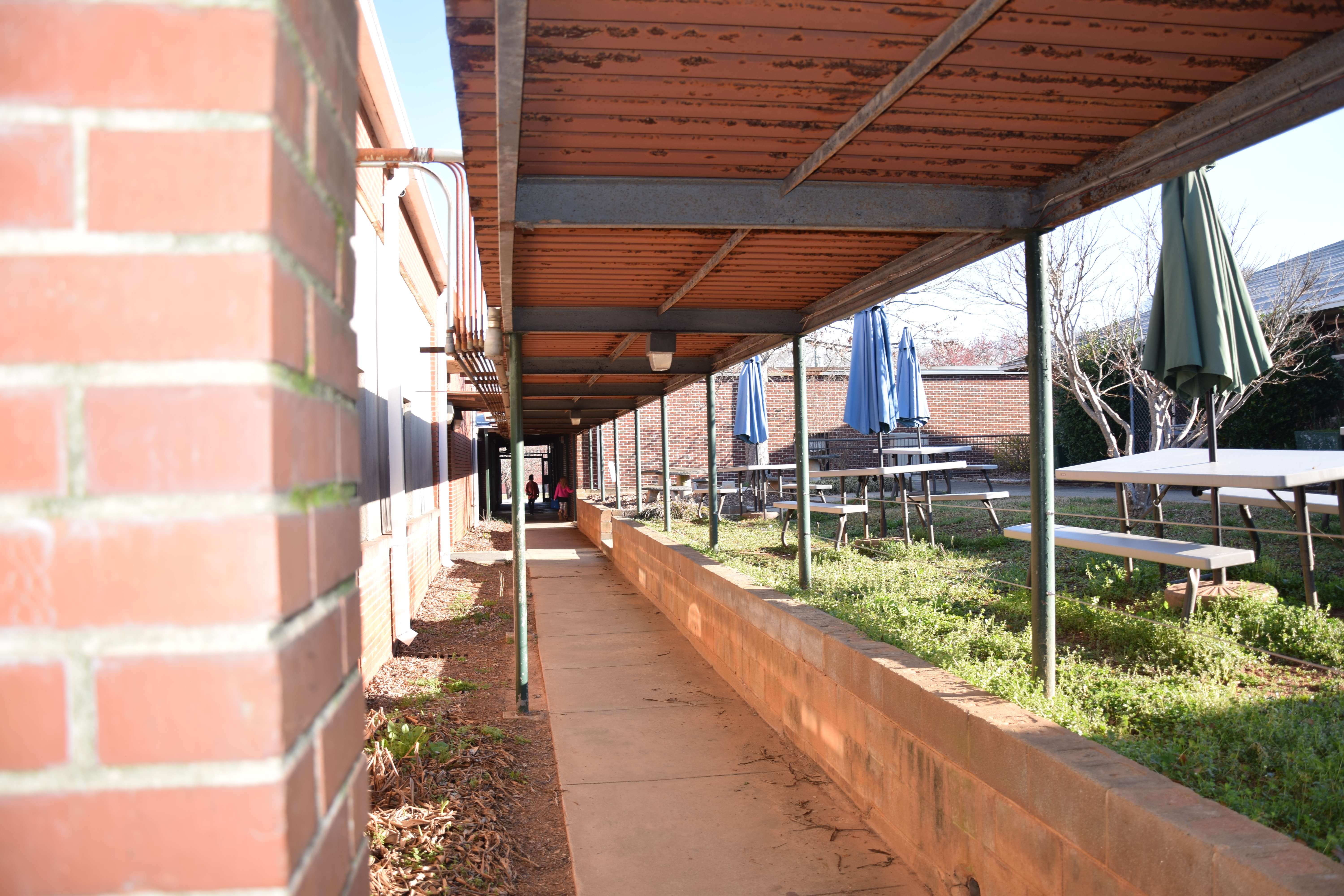
On a tour of the building Monday, Mattox pointed out that the school is very open to the outside.
Large windows allow passersby to peer into classrooms.
Multiple doors, though locked, can provide many access points to different parts of the school.
An open courtyard created when the various buildings were built around it, has large gates and fences to close out the outside as effectively as possible.
That courtyard also means that students in many grades have to go outside into the elements to go to lunch, visit the library or go to some classes.
“You want a courtyard you don’t have to use,” Colquitt said.
The school has narrow hallways that present a variety of challenges.
Mattox said that outside windows and doors make it hard to find safe places for students during bad weather drills, while the halls are dark in other areas, even with lighting at 100 percent.
Having grades in different buildings also means that each wing has to have a copy machine, which in most of the buildings just sits out in hallways.
Colquitt said it’s a challenge to have do things like spray the building for pests because each building has its own security system and codes.
The gym at Royston Elementary is also small – with no bleacher space – and has interior ceiling insulation hanging loose.
The location of the school – on a square between four city streets – requires teachers and staff members to cross city streets to get into the school and one city street is blocked off everyday during school hours.
The current school building has already been taken off of the Franklin County School System’s facilities list with the Georgia Department of Education.
The state provides funding when a school is taken off the list toward a new building.
That money was used to help pay for an expansion of Carnesville Elementary School because of the plans to build a new Royston school with SPLOST funds.
Colquitt said if Tuesday’s referendum does not pass, then the school system will have to place Royston Elementary back on the state list and reimburse the state funds.
It will also be very expensive to try to retrofit the current school to modern school construction standards, Colquitt said.
While there are issues with the current building, Colquitt and Mattox had nothing but praise for Royston community, the city of Royston and the Royston Police Department and their support for the school.
Royston is a unique, community school that hearkens back to the way schools used to be, the assistant superintendent said.
“I think this school has a personal touch other schools, including the ones I went to, do not have,” Colquitt said.
Mattox said the city is always responsive to any issues the school has, the Royston police are always available and that the community takes pride in the school.
Track, stadium turf top athletic improvements on SPLOST ballot
CARNESVILLE – Improving athletics facilities has been a focus for Franklin County Schools over the last few years.
Weight rooms have been redone or added at Franklin County High School and Middle School.
A new home for cheerleading and renovations to a former gym for wrestling have been done.
A new fieldhouse for middle school sports was built and locker rooms, meeting rooms and an indoor training area for high school football was completed.
The next step in the system’s efforts will come if the school system’s special purpose local option sales tax (SPLOST) is renewed by voters on March 16.
The Franklin County School System is asking to extend the local one-cent per dollar tax for five years or until it collects $30 million.
Athletic facilities – along with a new Royston Elementary School and agriculture education program additions – are one of the big three items on the SPLOST ballot.
While there are many items on the athletics department’s wish list, renovations to Ed Bryant Stadium are at the top of the list.
They will start with the resurfacing and reconfiguration of the track.
Athletic Director Jason Oliver said that the track’s surface has deteriorated, especially in lanes one and two.
“I don’t even feel comfortable running home meets,” Oliver said.
The track will also be reconfigured so that the sprint lanes run in the correct direction.
As the track is currently laid out, the sprint lanes begin on the opposite side of traditional tracks. The change will mean that a hill on the school-end of the stadium will have to be cut into and a retaining wall added.
“If I don’t do anything but give our cheerleaders a place to cheer and get a track to run in the right direction, I’ll be doing something,” Oliver said.
SPLOST funds are important for the project because track is a non-revenue sport.
Equipment for the sport, however, is expensive. Not including the track surface, a new pole vault pit, which is needed, could cost $20,000-$25,000, Oliver said.
The school system also plans to install artificial turf on the football field.
More and more schools are going to turf fields, Oliver said, and said turf will be a “game changer.”
An artificial surface drains quickly, which will mean spring sports, which start during the rainiest part of the year in Georgia, will always have a place to practice.
Football would also be able to choose whether to practice in the mornings before school or after school, Oliver said, and the marching band can practice on the actual field instead of an auxiliary field.
The track and turf projects will cost a total of about $2 million.
Oliver said he plans to have bid specifications in place so that if SPLOST is approved, he can quickly get bids out for the work. Hopes are to have the new track and football surface in place for the beginning of the 2021 football season.
The SPLOST funds will also be used to pay for a new digital scoreboard at Ed Bryant Stadium, some renovations to the visitors’ side of the field, a new sound system and possibly LED lighting.
Other items for athletics on the SPLOST wish list may include dugout renovations for softball and baseball, resurfacing tennis courts and other items if funds are available.
One item not on the list for this SPLOST will be a new or auxiliary gym for basketball.
That’s a need, Oliver said, but the more expensive cost of a new gym – $8-$10 million – will mean it will be a part of the next SPLOST extension in five years or so.
SPLOST to fund barn for more ag projects
CARNESVILLE – Franklin County is known for its family farms and FFA and agriculture programs.
If voters approve an extension of the special purpose local option sales tax (SPLOST) for schools on March 16, agriculture educators plan to expand their programs to reach more students who may not live on a family farm.
The Franklin County School System is asking to extend the local one-cent per dollar tax for five years or until it collects $30 million.
Agriculture education facilities – along with a new Royston Elementary School and athletic field renovations – is one of the big three items on the SPLOST ballot.
The money for agriculture will be used to build a new barn and for either renovating the current Agriculture Center at Franklin County High School or to build a new center.
Trey Harris, one of FCHS’s agriculture teachers, said the new barn will allow more students who don’t have land to raise a show pig, goat or calf to participate in the program.
"I started showing livestock when I could keep my pigs at the school barn,” student Zach Martin said. “My family doesn't know much about livestock or pigs and I am just grateful to have this opportunity. Starting as one of the younger members in the barn, I looked up to the older kids and valued their opinions and competitive spirit. Even when I had to sit out a show season because I had open heart surgery, my show family in the barn encouraged me and checked on my recovery quite often. I even found out that a pig was kept, fed and worked with as a reserve... just in case my recovery was quick enough for me to finish out the season."
It will also allow the program to diversify the kinds of animals kept at the barn.
Currently, the FCHS ag barn and program is pig-heavy.
The Franklin program is known for having students raise and show pigs, Harris said, and the program has expanded significantly.
Two years ago, the FCHS barn had eight pigs in it, Harris said. This season, there were 71.
“It’s definitely a need,” he said. “There’s been a lot of success we’ve found in the barn.”
Students who can’t keep their projects at home leave them at the barn and feed them before or after school each day.
Harris has students who serve as barn managers that oversee the chores at the facility and serve as mentors to younger students.
The impact of the program can be seen in one of those managers, Devin Bowyer.
Bowyer only began showing hogs two years ago but recently won the Senior Showmanship ribbon at the Georgia National Fair, Harris said.
The new ag barn will cater to the needs of all students and allow more participation by goat, sheep and calf projects, Harris said.
A concept drawing of the new barn – which would be located across High Road from the high school on acreage that is currently only used as the cross-country course – shows a facility about half the length of a poultry house.
The building will have fans on one end to pull fresh air through the barn and cool cells on the other to provide an area to keep cattle cool.
Cool temperatures encourage show cows to grow more hair, which is desirable in the show ring, Harris said.
Paddocks for the cattle will open up to an outside area where they could graze on fresh grass.
Multiple pens on the other end of the building could be tailored for pigs, sheep or goats, with interchangeable water features for each species.
A feeding station would be set up as part of the ag program’s self-made feed production.
Harris said Floyd Farms partners with the agriculture program to provide fresh corn and soybeans.
The program’s mixer makes the feed.
The new facility will have three bins – each filled with two tons of feed each.
Students will use a punch-pad system to get 25-pound buckets of feed for their animals.
Students who keep their animals at home can purchase the feed in 50-pound sacks, Harris said.
Another part of the new barn will include an air conditioned and heated seating area for parents who wait on their children to work in the barn.
Two locker rooms will include lockers for each student where they can keep work boots and clothes to change into before or after school to work their projects.
A lab-type area will serve as a large animal work station for pig castrations, breeding projects and necropsies of poultry.
The facility will also include an area to keep fresh and dirty wood shavings.
The idea for the barn was developed by a committee of community members and school leaders.
The committee is made up of Kent Hall, Gary Farmer, Gary Minyard, Stanley Whitsett, Cole Watkins, Trey Harris, Kirk Dawkins, Cole Roper, Blake Haley, Alan Mitchell, Dr. Savannah Thomas and Garren Hall.
The group toured barns in other counties for ideas on what to include and not to include, Harris said.
“I think this type of project showcases the importance of SPLOST,” Harris said.
The other big agriculture project on the ballot will be the Agriculture Center.
Franklin County School Superintendent Chris Forrer said either a renovation of the current center or a completely new center adjacent to the new ag barn are being considered.
If a new center is built, the current facility may be renovated as a banquet hall and meeting space, Forrer said.
Harris said the ag center changes came up because Franklin County has been approached about hosting larger animal shows – which would mean 300 pigs or 150 cows – that will require more space and seating capacity.
Early voting in the referendum to extend the special purpose local option sales tax (SPLOST) for education is open weekdays through March 12 from 8 a.m. until 4:30 p.m. at the Franklin County Elections and Registration office at 7850 Royston Road in Carnesville.
If the tax is approved by voters, the county’s total sales tax levy will remain at seven per cent.
The items to be funded are listed in the ballot question.